2026 Technology Trends Affecting Automation in Materials Testing
Automation, long a fixture of the production floor, has made its way into the materials testing environment across virtually all manufacturing sectors, from automotive and aerospace to medical devices and advanced polymers.
Materials testing equipment is no longer just a set of passive machines. Instead, the testing landscape is transforming into one where intelligent, integrated systems not only manage the testing process, but form a network that influences manufacturing operations and production efficiencies in near real time.
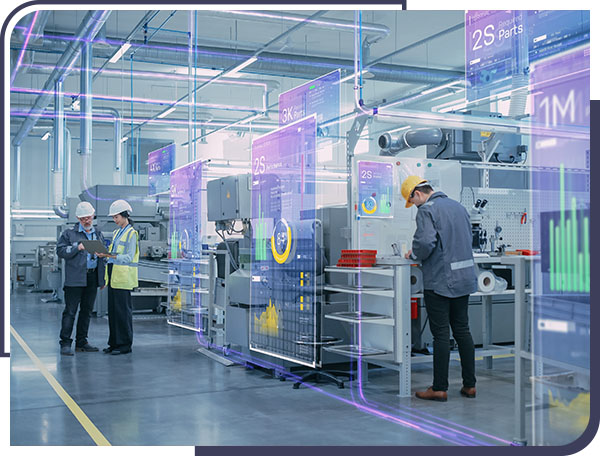
In addition to verifying materials’ performance and ensuring safety specifications, automated testing provides new means for innovative materials research as well as optimum production environments. The impact reaches well beyond simple data analysis and efficiency gains. Automation is the fundamental step for teeing up a materials testing environment to embrace an AI-enabled ecosystem. (Figure 1)

Digital Technologies Trends
In today’s manufacturing environments, you’d be hard pressed to find a company without a plan that includes some degree of AI implementation. Although materials testing has traditionally sat a bit apart from the manufacturing environment, today’s digitally-based equipment and advanced data sets are quickly becoming a streamlined part of facility operations.
But technology adoption should happen at the rate that makes sense for your test environment. A great place to start is to take stock of the available technologies and existing processes and see where you can make immediate improvements in your process versus planning for some more long-term investments.
Here we examine some trending technology shifts fueling automation adoption throughout materials testing:
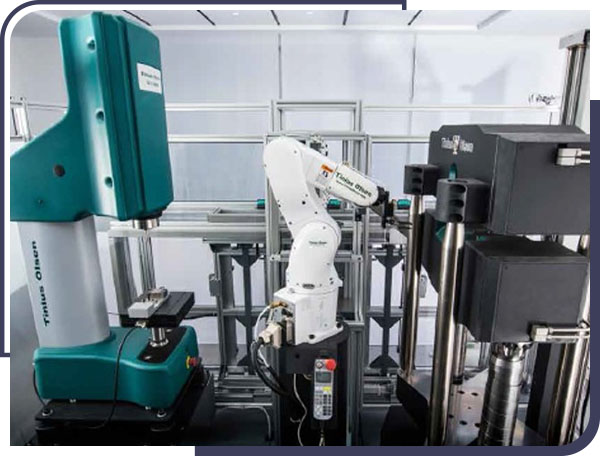
Closed-loop control. Not new, but expanding, closed loop control allows for continuous monitoring and real-time load adjustment. Systems using digital technologies can respond dynamically to how a material truly behaves rather than simply applying force at a fixed rate, for example. A recent implementation is the loadcell-based MP1500 that eliminates the need for a deadweight system in melt flow indexing and incorporates a closed-loop control system. (Figure 2)
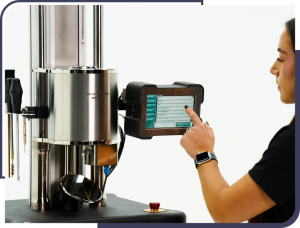
Extensometry. Contactless extensometry is making strides. One example is the UVX3D that not only removes the awkward useability issues of traditional units but offers elevated or enhanced technical performance that supersedes single-camera units. This extensometer captures a video stream and replays it with the digital strain data embedded for analysis and use, essentially allowing the user to replay the test.
A new class of extensometry is also emerging with the Vector, which serves as a cost-effective replacement for virtually any clip-on type of extensometer currently available. Its underlying AI-based technology has initiated a game-changing shift by turning the testing machine zone into a digital representation. Test events can easily be measured across large, small and even non-uniform specimens, with a simple, no-touch set up.
Integrated software. Highly sophisticated software platforms are not just observing what test machines are doing, but are helping to direct the process, serving as an extension of the test environment itself. The functionality goes far beyond simple data collection to include automation control, data management, and reporting capabilities that provide faster, deeper insights into material characteristics. These advanced software platforms are facilitating large-scale integration across system processes and providing easy access to more comprehensive and intuitive analysis.
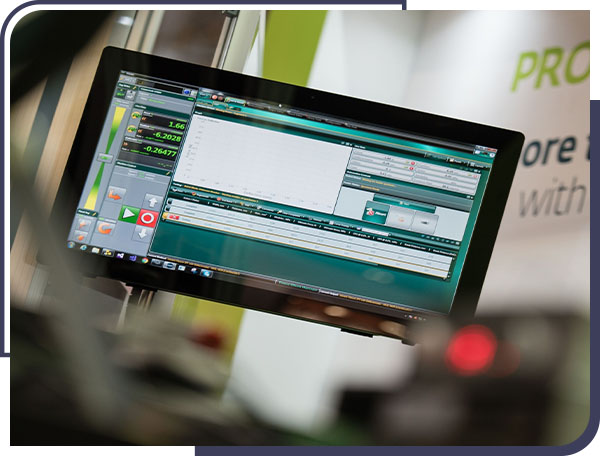
Take the Horizon platform that exemplifies this forward-looking strategy to elevate the materials testing digital landscape. Instead of requiring a full system overall, the software is structured in modules that allow users to implement technology upgrades where and when it makes sense, and only for the test and results needed. This inherent flexibility is the cornerstone of an automated testing environment, as it enables labs and manufacturing facilities to keep pace with technology advancements without sacrificing standardization or operational efficiency. (Figure 3)
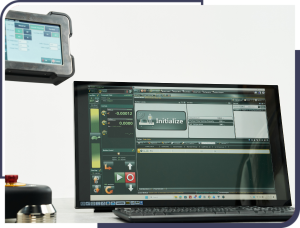
Multi-machine Systems. Some may consider this more of an outcropping of software technology advancements, but systems that run multiple machines simultaneously are being built, needing just one operator to oversee what used to be several, disparate test stations. As digital tools and technologies continue to fuse, a more networked infrastructure is becoming the norm, with a look towards multi-faceted test environments that are more integrated, optimized and cost-efficient.
Tinius Olsen offers a scalable, modular method of technology insertion that helps customers in their path to automation, on a timeline and within a budget that makes sense. This approach ensures that updates and investments keep pace with the test environment, whether it includes tensile, compression, flexural, impact, melt flow, hardness tests or another testing protocol.
Standards Still Reign as Technology Advances
Whether the goal is to determine the tensile strength of a structural alloy, characterize the flexural behavior of a fiber-reinforced composite, or evaluate the melt flow properties of a new batch of resin, materials testing is not a trivial process. Every test is governed by strict international standards that specify not just what to measure, but exactly how.
ASTM, ISO and other governing standards organizations remain essential to ensure consistent, repeatable and comparable results across different test environments and regions. Automation serves to facilitate the process and optimize the data, but standards provide the framework for reliable, universally repeatable results. Any automated testing platform needs to stay aligned with industry protocols, so that the measurement ecosystem, which includes calibration methods, sample handling, data analysis, test environments, and more, still follows these critical standardized methods.
The State of Automated Materials Testing
Automation is not simply about speed. It is about optimization, efficiency and integration. What was once a largely passive, machine-based process is evolving into an intelligent, interconnected ecosystem that influences manufacturing operations in near real time. Taking stock of trends today will prepare you for the materials testing environment you want tomorrow.
To learn more about what else is happening in the automated materials testing environment, download The Many Roles of Automated Material Testing (AMT) in Manufacturing white paper.