Ways to Use Exported Data for Better QA Manufacturing

Data has become extremely important in manufacturing. It serves as a collection of information and statistics used for reference or analysis. When gathered from a variety of sources along the production environment, this data gives manufacturers valuable insights to help optimize the supply chain, reduce costs, and improve the quality of their products.

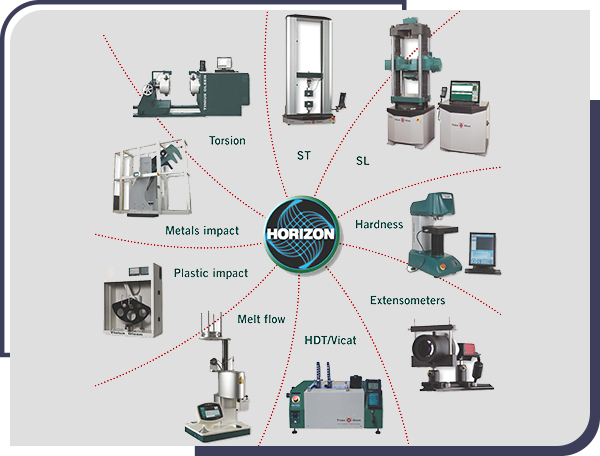
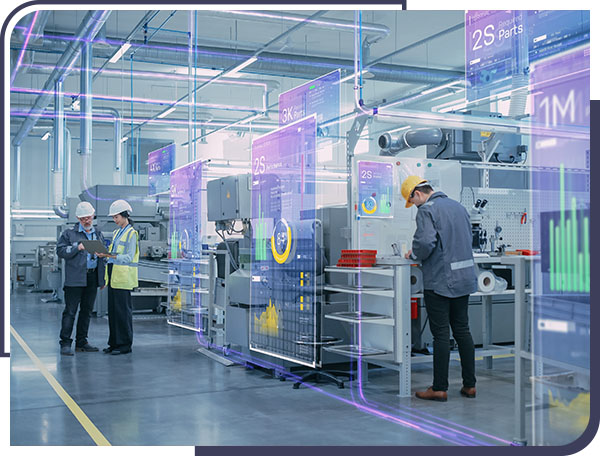
Data analytics takes this a step forward, helping manufacturers predict maintenance needs, prevent downtime, and create a safer work environment. By effectively using data in manufacturing, businesses become more sustainable and more profitable. (Figure 1)

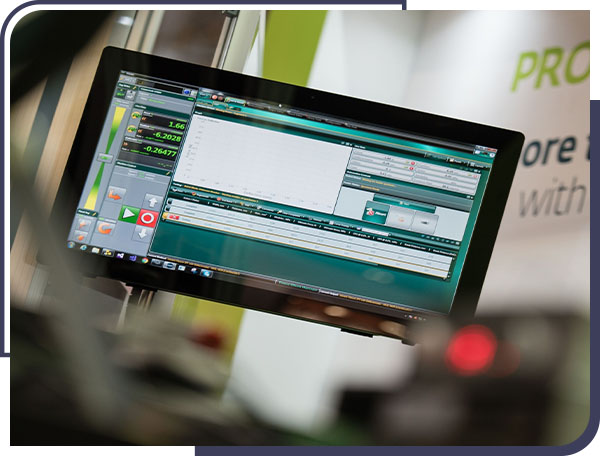
Tinius Olsen materials testing system using Horizon Software for data analysis and reporting
Figure 1. Data-centric materials testing environments can provide deeper analysis to drive both product and process decisions.

Automation for Improved Testing Efficiency

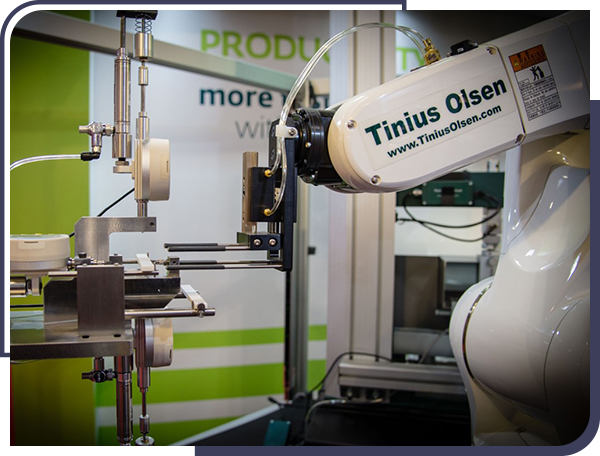
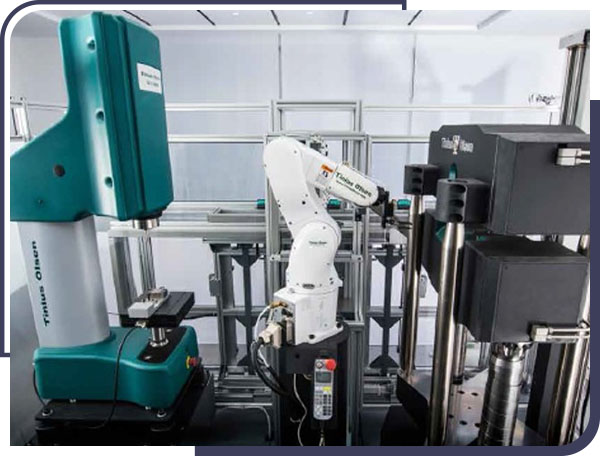
By running tests continuously or in parallel, often 24/7, automated materials testing is far more reliable than manual testing.  It improves testing efficiency by ensuring consistent, repeatable test parameters and reducing errors. The larger datasets generated by an automated materials testing system provide better, more reliable insights, while offering traceability and reproducibility. (Figure 2)

Tinius Olsen automated materials testing system showing robotic hand at the measurement station, a major data collection instance on this system.
Fig 2: Automated systems ensure reliable, repeatable testing for deeper data insights.

In its Digital Maturity Index 2023, Deloitte “found that 98% of 800 surveyed manufacturers in four major global economic regions have started their digital transformation journey, compared with 78% in 2019, and respondents reported cost optimization, operational efficiency, product innovation, and improving customer experience as key drivers for the shift.”

But how do these systems collecting and exporting data provide better quality assurance manufacturing? And how has the availability of that data improved manufacturing environments?


Data Access Made Easy

As the digital infrastructure continues to grow, working with the data gathered during test, whether for the demanding rigors of R&D or the charting and analysis functions of QC testing, is critical to modern materials testing. Horizon software from Tinius Olsen, for example, offers an intuitive interface, providing quick access to a number of usability and access points, such as:

  • Test method library
  • Test editor
  • Tabbed test and recall area
  • Multiple machine control
  • Output editor
  • Method editor
  • Result editor
  • Multifaceted security
  • Data importing
  • Report consolidation
  • Webcam functionality

This ease of gathering and analyzing data improves the manufacturing environment by enabling the collection, processing and analysis of statistically meaningful information that can help direct quality control and production efficiency.

The advanced, data-centric environment provided by the Horizon software delivers a powerful, adaptable interface that supports both research-intensive development and standardized quality assurance work to meet the evolving needs of materials testing. The platform can be used integrated into virtually any materials testing environment.


Putting Unprecedented Data Insights into Action

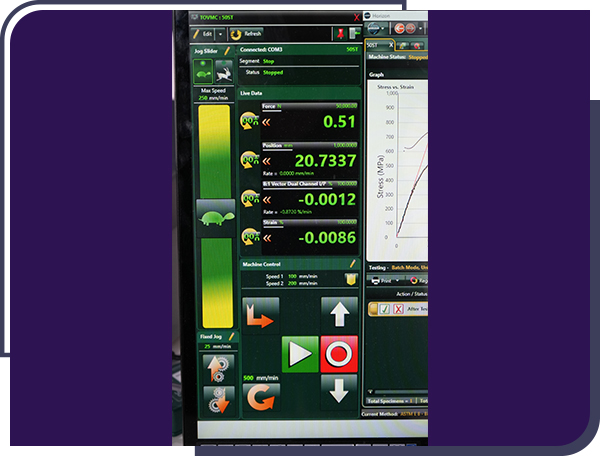
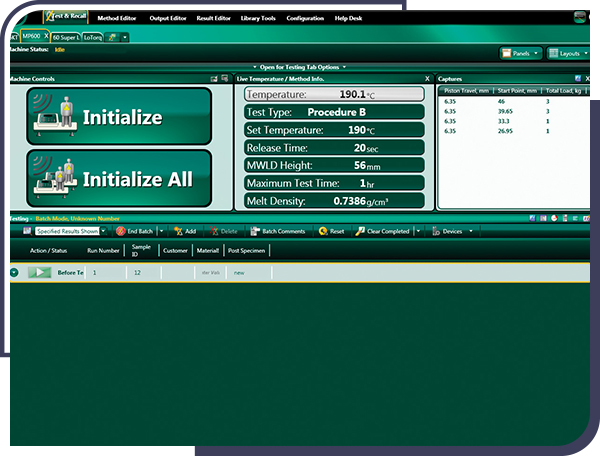
A typical data collection program will offer a variety of different graphs that can be produced per test, once all data has been gathered. But today’s data collecting and analysis methods can go much, much further relying on data across the continuum, from live data on a currently uploaded specimen to historical data obtained through several previous test iterations.  (Figure 3)

Tinius Olsen Horizon software test results data on screen
Fig. 3: Materials testing environments that embrace digitized data offer intuitive insights.

In addition to accessing live data during testing, acceptable limits of the results can be selected as well.  The results can be viewed graphically in multiple formats and customized for user-specific reporting. Unique results can be calculated from parameters and from other tests and equipment. Information can be exported to a variety of different formats, making data gathering and reporting seamless.


Following International Test Standards

If your testing regimen follows a quality control analysis to a variety of international standards, make sure you enlist a software program with a test method library that has been written in accordance with different international test standards, including ASTM, ISO, EN, BS DIN and more.

It should also allow for customized test setup, using a standard as a template, and be offered in multiple languages and dialects as well as with an option for users to create test method, giving them complete control over how the test machine performs throughout the course of the test. This will also help give you a wide variety of data to match your materials testing needs.

For example, the Horizon platform can convert hardness values into five different hardness (and tensile) scales simultaneously according to international standards (ISO/ASTM). For a global company where materials are tested at various locations, each follows different testing standards. If the same material is to be used across all sites, but the required validation varies according to local standards, different hardness scales may be needed.

For instance, the QA facility might follow ASTM standards requiring Rockwell hardness, while another location adhering to BS standards may specify Brinell hardness for the same material. In such cases, repeating the test in every scale is redundant — instead, the material can be tested once and the results converted using conversion function in Horizon, allowing the report to include equivalent hardness values across all relevant standards.


Conclusion: How is Data Used in Manufacturing?

The innovative use of data in manufacturing appears to be a stabilizing force for the global manufacturing industry. Data helps to predict future outcomes using both current analytics and historical data. This advanced methodology helps to decode complex manufacturing processes and improve materials testing outcomes.

Collecting data on the quality of a specific part can be helpful for auditing production processes and ensuring that work is standardized, as well as helping to reduce waste.

Materials testing analytics improve product quality by capturing machine-level information, boosting production yield and throughput. Data that shows the cost and effort involved in developing products helps quickly identify problems and predict issues. This aids in quality production, while significantly reducing costs. The use of data in manufacturing environments, especially in materials testing, has become a pinnacle of operational improvement.

For a deeper dive into using data in your materials testing environment, check out our white paper on Integrated Data Analysis Improves Efficiency in Materials Testing

Recent Shifts in Melt Flow Indexing

Over the past several years throughout the automotive, packaging, healthcare and electronics industries, the demand for plastics and polymers has been on the rise, increasing the frequency and use of melt flow testing across most manufacturing environments. Each industry must follow stringent quality control guidelines, as put forth by ASTM and ISO, to gauge precise measurements of melt flow properties, maintain quality control and establish consistent product development processes. (Figure 1)

Pink perforated bunny figurine demonstrates the consistent quality of plastics and polymers provided by melt flow testing
Figure 1. A critical aspect in product quality, standards-based melt flow testing helps ensure the consistent quality of plastics and polymers used in manufacturing.

Melt flow testing’s critical role helps determine the flow properties and viscosity of plastics and polymers in a variety of production applications. Melt flow index (MFI) testers are one of the staple materials testing systems companies use to meet the widely accepted ASTM 1238 D-23a and ISO 1133-1:2022 standards as well as comply with specific industry regulations.

Melt Flow Testing Basics

Manufacturing processes have different requirements based on the production method being used, the material being processed and the intended final product, but the melt flow test process is basically the same:

  1. Test Preparation: a known quantity of polymer granules is added to machine’s barrel
  2. Polymer Melting: polymer is heated to a specific, consistent temperature
  3. Load Applied: Force is applied to the piston (physical weights or via load cell)
  4. Polymer Extruded: Molten polymer is pushed through a die
  5. Extrusion Measurement: extruded polymer is collected over a specified period
  6. MFI Calculation: value is determined based on the extruded polymer weight and timeframe

The standard units to express the MFI calculation – typically g/10 min for melt flow index MFR or cm³/10min for volume flow index MVR (ASTM/ISO) – remain the same, allowing for consistency and comparability across different materials and testing conditions.

What MFI Testing Systems are Available?

Traditional melt flow indexers employ a set of physical dead weights that are either manually or automatically placed on the machine for testing. This type of system is best suited for applications with a stable environment, where load, temperature, and material composition don’t change.

However, most manufacturing facilities as well as research labs, universities and third-party testing companies need to accommodate at least some variables in the melt flow testing process.

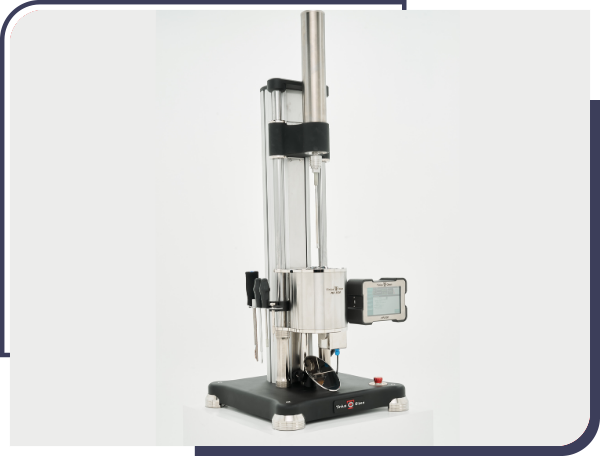
Load cell-based MFI systems are key in today’s materials testing environments to enable quick and easy modifications to test set ups. These systems also deliver far more precision, control, measurement, and available data for streamlined calibration as well as improved testing efficiency and operator safety across the MFI test process. (Figure 2)

Tinius Olsen closed-loop MP1500 Loadcell Melt Flow Indexer that applies load a motor and ball screw system with a proportional integral derivative control feedback
Figure 2. To meet variable test conditions and facilitate rapid set up, load cell melt flow indexers streamline plastics and polymer testing. Pictured: MP1500

A closed loop system, like the MP1500 Loadcell Melt Flow Indexer, will detect small variations in flow that a conventional weighted system may miss and can measure the sensitivity of force across the entire test for higher accuracy in the results. It works with closed loop, where load is applied by a motor and ball screw system with a PID (proportional integral derivative) control feedback. With no dead weights, human error is reduced and results across different labs and operators are more repeatable and consistent.

Integrated sensors enable real-time tracking of melt viscosity and flow behavior during extrusion as well as continuous monitoring of piston position, load, and displacement, and even rapid data logging and analysis.

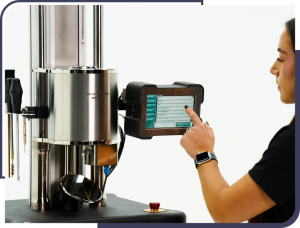
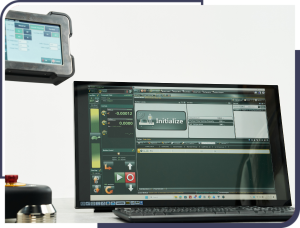
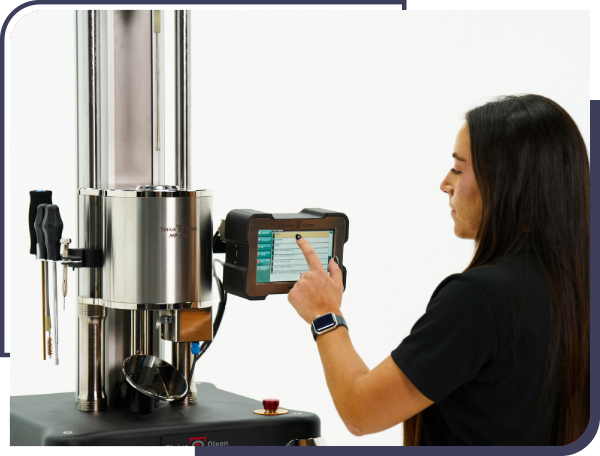
Operators can configure machine options and program user settings (language, units, alarms, etc.) from an integrated display interface as well as set and store individual test protocols for rapid recall. The unit can be controlled via the touchscreen when combined with a comprehensive software suite, like Horizon, the equipment becomes a test system powerhouse, improving overall manufacturing operations through shared data and advanced analytic capabilities. (Figure 3)

Alt text: Screen shot of Tinius Olsen’s intuitive Horizon software platform that cohesively manages the increasing amount of data sets available in modern materials testing.
Figure 3. Intuitive software platforms, like Horizon, cohesively manage the increasing amount of data sets available in modern materials testing.

Emerging Markets and Industry Needs

Load-cell based melt flow test systems are gaining popularity across a wide range of industries, from manufacturing, compounding, and packaging to automotive, medical, 3D printing, and recycling. By providing greater accuracy, automation, flexibility, and efficiency, these systems are instrumental in modern quality control labs and R&D environments as well as where precise material control and consistency is required.

As the use of plastics in these industries continues to evolve, there will be a steady growth in the need for melt flow testing. Technological advancements and efficient processes will be paramount in ensuring new applications and production environments maintain the level of quality performance demanded of today’s plastics and polymer resins and powders.

How Melt Flow Can Improve Plastics Production Efficiency

Melt flow testing is arguably one of the most useful tests in the plastics and polymer industry. It primarily helps measure the melt flow rate (MFR) of thermoplastic materials by determining the ease with which plastics and polymers can be melted and processed under specified conditions. Understanding how a material behaves during processing and manufacturing provides valuable insights into how it will respond in practical applications. (Figure 1)

A lineup of bottles representing the various types of plastics and polymers used in manufacturing plastic bottles.
Figure 1. Knowing how a plastic or polymer reacts during processing and manufacture is a key indicator of the overall integrity of a finished product.

There are several ways that the melt flow index (MFI) contributes to the production and manufacture of plastics and polymer-based products, including:

  • Evaluating quality and consistency
  • Improving production efficiency
  • Meeting regulatory requirements
  • Enhancing customer satisfaction

Why is Material Behavior Important

MFR indicates how easily the polymer or plastic flows when melted. The flow depends on the material’s viscosity—think of viscosity as resistance. The thicker a material, the higher the viscosity and the slower it will flow, resulting in a lower MFI. Similarly, a plastic composition that flows easily has a higher MFI and a lower viscosity.

The length of the molecular chain of the resin, called molecular weight, is also related to flow. Shorter polymer chains with simple geometry and thinner consistency offer less flow resistance. Fiber spinning, film blowing and thin-walled injection molding are typical production methods for this type of material.

Longer chains with a high molecular weight and more complex structure will have greater resistance as well as a thicker consistency. This material is used for blow molding, extrusion, and thick-walled injection molding, for example.

A melt flow index tester is the most popular device in the plastic industry to determine a polymer’s MFI value. It measures material viscosities and enables validation for batch-to-batch flow consistency that helps prevent defects in processing and ensures a reliable final product.

Understanding MFI is a notable aspect in plastics production, since some applications, such as thin film, precision parts and fiber and filaments, require a polymer with a higher MFI, so it flows easier. Other applications requiring more durable parts that withstand warping or shrinkage, for example, need a lower MFI polymer, so the final product will maintain its strength. These include containers, pipes, industrial housings, and automotive parts.

When choosing materials for a specific product or switching between suppliers, knowing the MFI provides a standardized way to compare different plastics or grades of the same polymer. Product quality remains consistent throughout the manufacturing process.

Plastics During Processing

During melt flow testing, a constant load is applied to a standardized sample of material, while measuring the rate of protrusion through a specific opening to get the MFR.

For test environments where load, viscosity, composition, and temperatures are constantly changing, such as research labs, universities or third-party testing facilities, an MFI with a load cell is a practical choice. These digital-based systems enable push-button calibration and load setting to quickly move from one test set up to the next, accounting for all the application variables.

Traditional machines using a manual or automatic dead weight loading system are sufficient when testing the same mixture consistently under the same load, as found throughout manufacturing, but production efficiency and plant modernization may still warrant a load cell test system in many of today’s manufacturing environments. (Figure 2)

Tinius Olsen melt flow testers come with manual or motorized dead weights for static test applications or with digital load cells, where greater precision and flexibility is needed.
Figure 2. Melt flow testers come with manual or motorized dead weights (L: MP1200M motorized) for static test applications or with digital load cells (R: MP1500), where greater precision and flexibility is needed.

Consistent Quality Through Industry Standards

The melt flow rate helps to define the needed parameters, such as temperature, pressure, and screw speed, for a material during each specific manufacturing process.

Without this insight into how that material may react during manufacture, the polymer may be processed incorrectly, leading to quality or safety concerns, such as poor surface finish, voids, or incomplete filling of molds.

ASTM D1238 and ISO1133, the most common industry standards for melt flow testing, are also an integral part of melt flow indexing, as they further ensure the quality and consistency across different manufacturing environments and polymer applications.

  • ASTM notes that ASTM 1238D-23a is a “standard test method for melt flow rates of thermoplastics by extrusion plastometer.
  • Per ISO, ISO1133-1:2022 is for the “determination of the melt mass-flow rate (MFR) and melt volume-flow rate (MVR) of thermoplastics.”

Each provides testing parameters for a manual method – (Procedure A; Method A) as well as for an automatic timed flow measurement (Procedure B; Method B).

Impact of Material Quality on Manufacturing

With global shifts in the overall supply chain, from raw material to final products, manufacturers need reliable methods to evaluate production at every stage of product development. Having a good understanding of the manufacturing process and identifying any possible defects that could appear in the final product is on the forefront of the minds of plant engineers, product developers, and CEOs, alike. (Figure 3)

Physical properties of raw materials, especially, are under scrutiny to ensure that the correct material or material formulation is selected for the right application, and that the material being used is suitable for the end product. Melt flow testing is one such test that helps companies ensure the plastics and polymers being used are consistent in quality and are appropriate for the intended end use.
Figure 3. From raw material (L) to finished product (R), melt flow index testing ensures consistency across the manufacturing process to ensure quality results.

Physical properties of raw materials, especially, are under scrutiny to ensure that the correct material or material formulation is selected for the right application, and that the material being used is suitable for the end product. Melt flow testing is one such test that helps companies ensure the plastics and polymers being used are consistent in quality and are appropriate for the intended end use.

Check out our Melt Flow Index Testing playlist on YouTube to learn more.

Building Trust Through Innovation in Materials Testing: LTI and Tinius Olsen’s Collaborative Journey

Introduction

In the world of materials testing, precision and reliability are paramount. Companies in high-stakes industries such as aerospace, nuclear, and additive manufacturing depend on advanced technology to meet rigorous standards.

Based outside of Philadelphia, PA, Laboratory Testing Inc. (LTI) has been at the forefront of materials testing for over 40 years, ensuring that its clients receive the highest level of accuracy and efficiency. Its long-standing relationship with Tinius Olsen has played a crucial role in fostering innovation, streamlining testing processes, and enhancing overall efficiency. 

A Relationship Built on Collaboration

LTI’s partnership with Tinius Olsen is more than just a customer-supplier relationship — it is a dynamic collaboration. Over the years, LTI has provided valuable feedback to Tinius Olsen, influencing the development of new and improved testing systems.

As Mechanical Testing Manager Paul Szczepaniak from LTI shares, “Being part of the actual product development is an interesting experience. There’s a good back and forth between the companies, because we see what we need, and Tinius Olsen is always willing to accommodate.” (Figure 1)

Tinius Olsen and LTI Testing Processes
Figure 1. LTI has worked with Tinius Olsen to advance material testing innovations and streamline LTI’s testing processes.

This direct engagement has resulted in tailored materials testing solutions that address real-world challenges, allowing LTI to optimize its operations, while contributing to the continuous evolution of Tinius Olsen’s technology. 

Supporting Industries Through Innovative Solutions

To maintain an industry leadership position in the diverse range of industries it serves, LTI relies on sophisticated test systems that seamlessly integrate into its workflows. Tinius Olsen’s Horizon test system has been a game-changer for LTI, providing a streamlined and customizable platform that enhances data acquisition and usability. 

“The ability to use that system and have it constantly updated has been invaluable,” says LTI’s Mechanical Testing Coordinator, Nathan Moyer. “Even if we request a specific feature, unless it’s an extremely complex demand, they generally implement it within a day or two.” This level of responsiveness and agility sets Tinius Olsen apart from its competitors, ensuring that partners like LTI can maintain its competitive edge. 

Efficiency and Innovation with Non-Contact Extensometry

In high-volume materials testing environments, efficiency is key. LTI has significantly enhanced its operations with Tinius Olsen’s Vector Extensometer, which eliminates the limitations of traditional contact extensometers. The digital extensometer integrates adaptive AI capabilities with optical hardware to reduce test throughput times and complexity, automating the process of capturing strain and improving measurement accuracy, data consistency and operator safety. (Figure 2)

Tinius Olsen Vector Extensometer
Figure 2. The Vector Extensometer improves operational efficiency by allowing LTI to test an unlimited amount without having to re-verify the unit.

“Since it is non-contact, we could continuously run sample after sample and never have to re-verify the calibration of the extensometer,” Nathan explains. “And because it gives us digital, data-driven materials test processing, we have access to synchronized data in real-time, with virtually no lag.”

These advancements have minimized downtime, reduced costs, and improved throughput. The combination of Tinius Olsen’s precision hardware and sophisticated software has enabled LTI to optimize its testing processes like never before. 

Reliability: The Backbone of Testing Operations

In a fast-paced and demanding industry, equipment reliability is non-negotiable. At LTI, almost every mechanical testing process involves a Tinius Olsen test system, from universal testing systems (UTMs) and hardness testers to impact test systems and melt flow indexers. Tinius Olsen systems form the backbone of LTI’s daily operations. This level of reliability ensures that LTI can meet the high standards required by its clients, while maintaining operational efficiency. 

Driving Industry Innovation Together

Beyond advanced and innovative system offerings, Tinius Olsen’s active participation in ASTM standardization efforts further underscores its commitment to industry advancement. Paul shares, “If I receive a request from a customer that falls outside normal scopes, I can reach out to them and say, ‘Here’s what I’m trying to do. What can we do?’” This open collaboration has led to the development of custom instruments and unique testing setups that cater to LTI’s specific needs. 

Moreover, Tinius Olsen’s commitment to swift customer support ensures that LTI experiences minimal downtime. “We just had a long-standing system go down, and Tinius Olsen had us back up in three days, whereas with another company, it could have taken weeks,” Paul highlights. 

Conclusion

LTI’s decades-long relationship with Tinius Olsen exemplifies what true collaboration in materials testing looks like. Through constant innovation, responsive customer support, and advanced technology, Tinius Olsen has not only helped LTI optimize its processes, but has also played a pivotal role in advancing the materials testing industry as a whole. 

For companies looking for a trusted partner in materials testing, the success story of LTI and Tinius Olsen speaks volumes. When precision, efficiency, and reliability matter most, Tinius Olsen delivers solutions that stand the test of time. 

Hear it direct. Check out this video from Nathan and Paul at LTI about their experience working with Tinius Olsen.

Two Test Systems, One Software Platform

Technology innovations in materials testing aren’t just providing better data analytics, they are also providing improved testing efficiencies. In an industry predicated on long-standing industry standards that dictate the parameters of test results—including precision, repeatability and accuracy—we’re still finding ways and opportunities to improve testing efficiency across the industry and focus on improvements, where it makes sense.

Because the standards themselves don’t change much from year to year, we can seek other methods of process improvement. Digitizing test information using updated tools, like enhanced software packages, has allowed users to collect, manipulate, analyze, graph and store data in ways that previously were just not feasible. This ability to make testing data more actionable gives us deeper insights into our materials testing operations.

Streamlined Process Through Software Advancement

Prior to the use of intuitive software platforms, a computer system was typically needed for each testing set up. That also meant space was needed for each machine, test system, etc. Moving data analysis into a streamlined software process not only helps move our industry forward, but it’s also transforming how we can do things with better data insights and more efficient reporting, while enabling a smaller test system footprint on the testing floor. (Figure 1)

Tinius Olsen Warehouse Workers

Fig. 1: Advancements in software platforms are providing a more holistic materials testing environment that both improves production and saves floor space within a facility.

Where space is at a premium, like in a lab where there is already quite a bit of existing infrastructure and the constant need to upgrade, with limited space to do so, materials testing software has completely changed how things are done. In the case of Horizon software from Tinius Olsen, there’s more than just space-saving benefits; it has the ability to manage both the test procedures and the automation, making data easily accessible, for everything ranging from R&D to charging and analysis functions of QC testing.

A Gamechanger On the Testing Floor

A recent application at a global polymer matrix composite manufacturer put Horizon’s capabilities to the test. An automated materials testing system using the software was built so that two independent automated tests – tensile (ASTM D638) and flexure (ASTM D790) – ran simultaneously on the same machine. The reduced scale of the system in footprint alone enabled a more efficient testing environment, and the physical assembly was complemented by enhanced digital data exchange across internal processes, which included a bar code led data flow, customized results, alerts and system status.  (Figure 2)

Tinius Olsen Two Test Systems

Fig. 2: Running one software platform across multiple test environments can reduce the materials testing footprint needed, especially critical for upgrades in existing facilities. 

Key to this testing set up is the robotic arm, which accesses the specimen rack and test frame for both machines, all running on a single Horizon software platform. Through just one automation cell, the two tests are performed, streamlining data, reducing latency and improving materials testing results.

Overall Operations Improved

Whether you’re controlling and gathering data from multiple melt indexers, hydraulic tensile testing machines, or electromechanical testing machines that are performing tensile, compression, flexural, tear, peel or other tests, Horizon can run all the tests and gather all the information in one place. In addition, the software features a recall function that enables you to add key data that is either not available or missed. All digital data is streamlined and easily accessible.

Once all data has been gathered, the software’s result editor and output editor can consolidate all data that has been generated into customizable reports, depending on what type of analysis you or your customers may need. Multiple graph types can be applied per test, like stress vs. strain, or load vs. time, and reports can be distributed across one PC, multiple PCs, or across a network for easy multi-team access, keeping everyone on the same page. (Figure 3)

Tinius Olsen Intuitive Software Platforms

Fig. 3: Intuitive software platforms, like Horizon from Tinius Olsen, enable streamlined data processing and more advanced results and analysis.

Confidence In Your Testing Methodology

If your testing regime follows a quality control analysis to a variety of international standards, be sure your software includes a built-in test method library built that enables you to select test methods that have been written in accordance with your applicable industry and international test standards.

The ability to customize the test setup using a standard as a template and a configurable database that facilitates sharing across several computers on a company’s network are also important aspects to consider, as this will allow the testing programs and testing data to be used by multiple systems.

As part of the software’s development process, Tinius Olsen took the best features of its existing software, including Test Navigator, QMat and EP600, added a host of report writing and data manipulation capabilities and created Horizon, now one of the most advanced software platforms for materials testing.

As we move forward as an industry, we should continue to develop the means to innovate the materials testing process by focusing not only on testing machines, but on the holistic process of our testing environments.

Sustainable Alternatives Gain Validation Through Materials Testing

The past few years have shown us that the world around us is finite and fragile. And we all play a part in its sustainability.  There has been a push across several industries to develop inventive, forward-looking products and technologies, while maintaining a better balance with the environment for long-term global health.

With innovation comes the unknown. Will a newly developed material stand up to the defined ASTM or ISO standards or will the use of a different material in an existing application meet the required industry standard benchmarks?  Standards exist to ensure product safety and quality, which is all for the benefit and protection of the end user.

Confidence in Material Innovations

As an industry, we are tasked with maintaining a level of confidence in the products and solutions being delivered, and standards are an important aspect of that. There are many promising examples of sustainable products that incorporate recyclable or biodegradable materials and also support an eco-friendly environment.  But to be able to confidently put these innovations into the mainstream, companies still rely on materials testing to known industry standards and specifications.

Material testing provides the insight to gauge the useability of certain materials and products in specific environments. And in the world of eco-friendly material innovation, it has helped lay the groundwork to develop solutions beyond just delivery of a product, but also to help combat climate change, to increase types and quantities of materials that can be recycled, and ultimately open doors to innovations that are solving some real-world challenges.

Recycled Glass Aggregate

The collapse of I-95 in Philadelphia, PA seemed, at first, catastrophic. Initial calculations framed the road closure in years, then possibly over several months.  So who would have thought that in a mere few weeks, this massive roadway connecting a large swath of the eastern United States would be up and running after such an epic event, using a sustainable material made from glass.

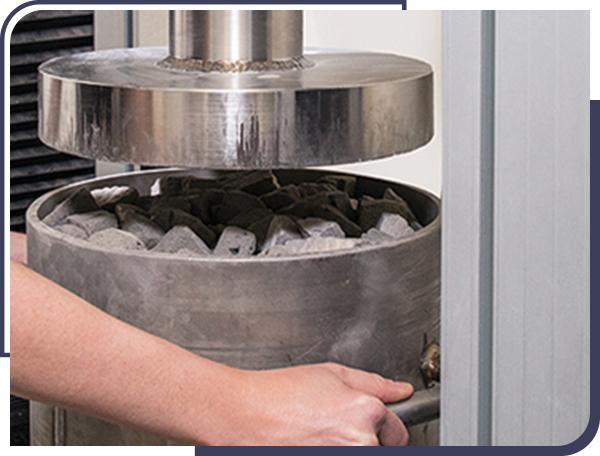
Recycled glass aggregate is not new. Formed by crushing glass into a powder, blending it with a foamy slurry, heating it and then breaking it into briquettes, the crushed aggregate is used in a number of construction applications, including as backfill or in roller applications.  The size, shape, density and strength of the aggregate all affect its long-term performance in pavement and structures.

Testing of the ultra-lightweight foamed aggregate is critical to prove its efficacy and ensure it has the strength needed to bear the weight and force of heavy-duty construction. It also confirms that the aggregate is composed of a good mix of chemicals and materials that can compact to and withstand a certain force. Thanks to testing performed using Tinius Olsen equipment, the company developing the aggregate already had the results and data to know this aggregate could serve as the backfill for the temporary lanes constructed along the highway corridor.


TOL Sustainable Alternatives

Figure 1: Testing of the aggregate is carried out with Tinius Olsen equipment.

Sustainable Wool Rope

Seaweed farming itself is not only a sustainable source for fertilizer, bio-ethanol and livestock feed, but it helps negate carbon and nitrogen levels in the ocean as well as provides a healthy ecosystem for marine life. So the fact that non-recyclable, everlasting polypropylene rope is laid on the sea floor to grow the harvested seaweed counterbalances the environmentally-friendly aspects of growing a renewable resource. And this plastic rope is washing up on coastlines across the globe, rubbing against rocks, resulting in a hard plastic crust coating the coastlines.

But what if the rope was made of biodegradable wool that itself is sustainable and renewable.  Would its physical properties still hold up as needed in the corrosive saltwater environment? Tinius Olsen is helping to answer this question.

Manufactured in a range of diameters, from small lengths to full coils, all of the wool rope currently produced is from local farms and craftspeople in the United Kingdom. But this paradigm shift for seaweed farming needs validation and is being accomplished through materials testing.  By relying on proven equipment Tinius Olsen is helping to identify the proper breaking strain as well as design the special grips needed to hold the rope for proper testing.


TOL Sustainable Alternatives

Figure 2: The sustainable rope is used to farm seaweed and shellfish

Testing of Eco-friendly Innovations

In the world of materials testing, manufacturers turn to industry standards to enable them to validate, qualify and prove the viability of their products and raw materials.  For materials pushing the envelope of what is known and acceptable, testing to a defined set of compliance levels becomes even more critically important.

Developing sustainable material alternatives and bringing them to market is no small feat. Testing validation is just one aspect of this process. Also of importance is a partner invested in the success of innovative product development and who has the technical knowledge and pedigree to deliver quality testing equipment to validate your product innovations.