Cost Efficiencies of Materials Testing for Improved Operations
Materials testing is one of the most valuable ways to ensure quality products by providing consistent, measurable results based on industry standards.
From the manufacturing plant and research laboratory to numerous universities and educational institutions, companies use materials testing to ensure product excellence, optimize efficiency, and prevent costly failures. While every sector uses materials testing for different reasons, the goals remain consistent — improve product development and reliability.
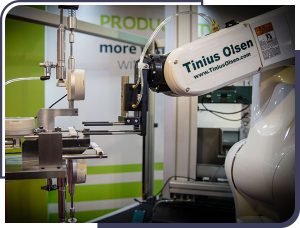
An important, yet often overlooked benefit, is cost efficiency. By understanding the properties and behaviors of materials, organizations can make smarter decisions that drive long-term savings and innovation. (Figure 1)

Assessing Total Business Value
Across all markets, materials testing drives measurable economic and operational efficiencies, offering a powerful return on investment. Some of the most significant benefits include:
- Reduced Material Waste: Optimizing processes ensures materials are used precisely where needed.
- Minimized Product Failures: Testing helps prevent recalls, warranty claims, and loss of brand trust.
- Boosting Production Processes: Fine-tune settings for maximum efficiency and minimal downtime.
- Improved Product Longevity: Verified materials deliver better performance over time, reducing maintenance costs.
- Accelerated Innovation: Validated materials help researchers bring new technologies to market faster and more cost-effectively.
A solid materials testing strategy will help in prioritizing and assessing what needs evaluation and when:
- Critical, more costly, tests can be performed first to minimize rejected sample and expensive tests
- Multiple tests can be run simultaneously on a given set of samples
- Batched or representative sample sets reduce costs and testing time
- Added automation helps to streamline operations
- Documented testing maintains standards compliance
The effect is clear. Faster, more efficient testing means better throughput and less waste. With improved capacity, companies can evaluate more materials and design options. The result is informed decisions that provide better insights and lower operating costs.
How Automation Contributes to Cost Efficiency
Automated materials testing is becoming a mainstay, with options ranging from semi-automated to fully autonomous systems. As these systems more deeply embrace data-driven architectures, companies can gain even more cost savings. Integrated software platforms, such as Horizon, provide test control, data collection, analysis, and reporting that improve quality records, enable easier audits, and reduce overall errors. (Figure 2)

Automated systems can run large volumes of specimens across more tests per day with limited or even no operator intervention or calibration needed in between tests. And test data can flow directly into the software platform.
The Role of Materials Testing in Manufacturing
For manufacturers and third-party testing facilities, materials testing forms the backbone of quality assurance. It ensures that every material used in production meets industry standards, regulations, and specifications.
A robust testing process starts by identifying potential weaknesses in raw materials before they reach the assembly line. This not only improves product performance and safety but also reduces the risks of defects, recalls, and warranty claims—issues that can significantly impact profitability and brand reputation.
But beyond quality control, materials testing helps streamline production efficiency leading to better cost optimization. By understanding how materials respond to factors such as stress, heat, or fatigue, manufacturers can minimize waste and improve throughput. For example, knowing the exact limits of a material’s tensile strength can prevent overuse, saving both time and resources.
Simply put, every dollar invested in testing up front can prevent thousands in lost production costs, warranty issues, or customer frustration later on.
Driving Research and Proving New Technologies
In research labs and universities, materials testing validates the performance of new materials and products—bridging the gap between theory and real-world application.
Insights into a material’s mechanical, thermal, and chemical properties allow scientists to assess potential uses, optimize formulations, and meet specific performance criteria. For instance, researchers developing advanced composites or materials rely on testing data to ensure those materials can withstand the conditions of their intended use.
Materials testing not only verifies what works, but also reveals why something works, leading to faster development cycles and more cost-effective R&D investments. The ability to identify issues early in the design phase reduces trial-and-error experimentation, shortens time to market, and ensures that resources are used efficiently.
In essence, materials testing is the key that unlocks innovation—turning promising concepts into reliable, scalable technologies.
Reducing Costs and Increasing Purpose
Materials testing is a strategic investment in quality, efficiency, and innovation. Not only can organizations realize substantial cost savings, but they can enhance their competitive edge. Whether ensuring the reliability of manufactured goods, validating breakthrough technologies in research, or driving discovery within universities, this critical testing infrastructure provides the foundation to support progress and improve cost efficiencies.
What’s Next?
Ready to optimize your materials testing process to save time and money? Check out The Many Roles of Automated Material Testing (AMT) in Manufacturing white paper for more insights.