Ways to Use Exported Data for Better QA Manufacturing

Data has become extremely important in manufacturing. It serves as a collection of information and statistics used for reference or analysis. When gathered from a variety of sources along the production environment, this data gives manufacturers valuable insights to help optimize the supply chain, reduce costs, and improve the quality of their products.

Data analytics takes this a step forward, helping manufacturers predict maintenance needs, prevent downtime, and create a safer work environment. By effectively using data in manufacturing, businesses become more sustainable and more profitable. (Figure 1)

Tinius Olsen materials testing system using Horizon Software for data analysis and reporting
Figure 1. Data-centric materials testing environments can provide deeper analysis to drive both product and process decisions.

Automation for Improved Testing Efficiency

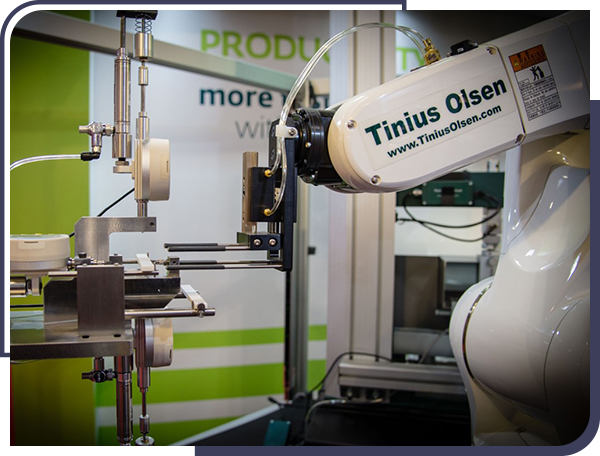
By running tests continuously or in parallel, often 24/7, automated materials testing is far more reliable than manual testing.  It improves testing efficiency by ensuring consistent, repeatable test parameters and reducing errors. The larger datasets generated by an automated materials testing system provide better, more reliable insights, while offering traceability and reproducibility. (Figure 2)

Tinius Olsen automated materials testing system showing robotic hand at the measurement station, a major data collection instance on this system.
Fig 2: Automated systems ensure reliable, repeatable testing for deeper data insights.

In its Digital Maturity Index 2023, Deloitte “found that 98% of 800 surveyed manufacturers in four major global economic regions have started their digital transformation journey, compared with 78% in 2019, and respondents reported cost optimization, operational efficiency, product innovation, and improving customer experience as key drivers for the shift.”

But how do these systems collecting and exporting data provide better quality assurance manufacturing? And how has the availability of that data improved manufacturing environments?


Data Access Made Easy

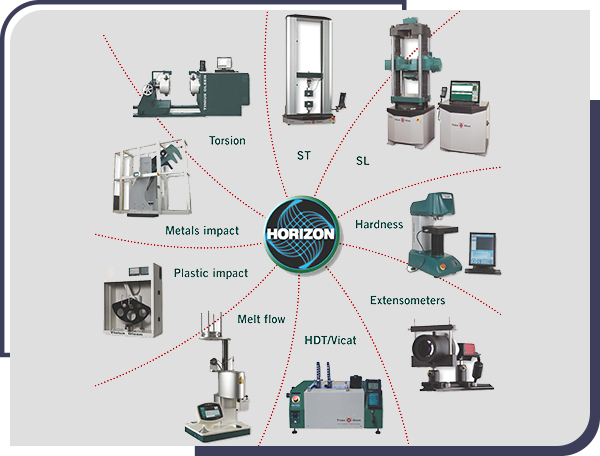
As the digital infrastructure continues to grow, working with the data gathered during test, whether for the demanding rigors of R&D or the charting and analysis functions of QC testing, is critical to modern materials testing. Horizon software from Tinius Olsen, for example, offers an intuitive interface, providing quick access to a number of usability and access points, such as:

  • Test method library
  • Test editor
  • Tabbed test and recall area
  • Multiple machine control
  • Output editor
  • Method editor
  • Result editor
  • Multifaceted security
  • Data importing
  • Report consolidation
  • Webcam functionality

This ease of gathering and analyzing data improves the manufacturing environment by enabling the collection, processing and analysis of statistically meaningful information that can help direct quality control and production efficiency.

The advanced, data-centric environment provided by the Horizon software delivers a powerful, adaptable interface that supports both research-intensive development and standardized quality assurance work to meet the evolving needs of materials testing. The platform can be used integrated into virtually any materials testing environment.


Putting Unprecedented Data Insights into Action

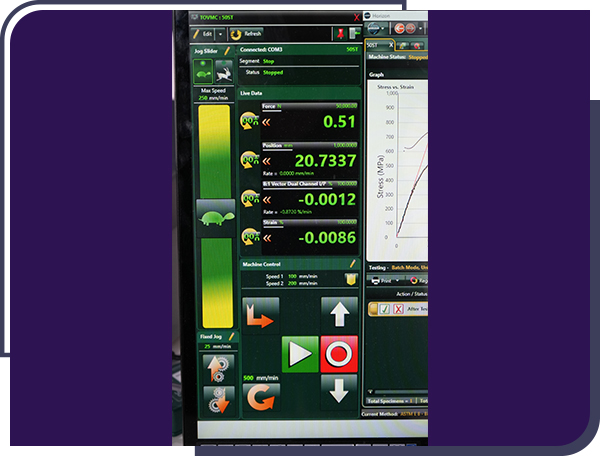
A typical data collection program will offer a variety of different graphs that can be produced per test, once all data has been gathered. But today’s data collecting and analysis methods can go much, much further relying on data across the continuum, from live data on a currently uploaded specimen to historical data obtained through several previous test iterations.  (Figure 3)

Tinius Olsen Horizon software test results data on screen
Fig. 3: Materials testing environments that embrace digitized data offer intuitive insights.

In addition to accessing live data during testing, acceptable limits of the results can be selected as well.  The results can be viewed graphically in multiple formats and customized for user-specific reporting. Unique results can be calculated from parameters and from other tests and equipment. Information can be exported to a variety of different formats, making data gathering and reporting seamless.


Following International Test Standards

If your testing regimen follows a quality control analysis to a variety of international standards, make sure you enlist a software program with a test method library that has been written in accordance with different international test standards, including ASTM, ISO, EN, BS DIN and more.

It should also allow for customized test setup, using a standard as a template, and be offered in multiple languages and dialects as well as with an option for users to create test method, giving them complete control over how the test machine performs throughout the course of the test. This will also help give you a wide variety of data to match your materials testing needs.

For example, the Horizon platform can convert hardness values into five different hardness (and tensile) scales simultaneously according to international standards (ISO/ASTM). For a global company where materials are tested at various locations, each follows different testing standards. If the same material is to be used across all sites, but the required validation varies according to local standards, different hardness scales may be needed.

For instance, the QA facility might follow ASTM standards requiring Rockwell hardness, while another location adhering to BS standards may specify Brinell hardness for the same material. In such cases, repeating the test in every scale is redundant — instead, the material can be tested once and the results converted using conversion function in Horizon, allowing the report to include equivalent hardness values across all relevant standards.


Conclusion: How is Data Used in Manufacturing?

The innovative use of data in manufacturing appears to be a stabilizing force for the global manufacturing industry. Data helps to predict future outcomes using both current analytics and historical data. This advanced methodology helps to decode complex manufacturing processes and improve materials testing outcomes.

Collecting data on the quality of a specific part can be helpful for auditing production processes and ensuring that work is standardized, as well as helping to reduce waste.

Materials testing analytics improve product quality by capturing machine-level information, boosting production yield and throughput. Data that shows the cost and effort involved in developing products helps quickly identify problems and predict issues. This aids in quality production, while significantly reducing costs. The use of data in manufacturing environments, especially in materials testing, has become a pinnacle of operational improvement.

For a deeper dive into using data in your materials testing environment, check out our white paper on Integrated Data Analysis Improves Efficiency in Materials Testing

Recent Shifts in Melt Flow Indexing

Over the past several years throughout the automotive, packaging, healthcare and electronics industries, the demand for plastics and polymers has been on the rise, increasing the frequency and use of melt flow testing across most manufacturing environments. Each industry must follow stringent quality control guidelines, as put forth by ASTM and ISO, to gauge precise measurements of melt flow properties, maintain quality control and establish consistent product development processes. (Figure 1)

Pink perforated bunny figurine demonstrates the consistent quality of plastics and polymers provided by melt flow testing
Figure 1. A critical aspect in product quality, standards-based melt flow testing helps ensure the consistent quality of plastics and polymers used in manufacturing.

Melt flow testing’s critical role helps determine the flow properties and viscosity of plastics and polymers in a variety of production applications. Melt flow index (MFI) testers are one of the staple materials testing systems companies use to meet the widely accepted ASTM 1238 D-23a and ISO 1133-1:2022 standards as well as comply with specific industry regulations.

Melt Flow Testing Basics

Manufacturing processes have different requirements based on the production method being used, the material being processed and the intended final product, but the melt flow test process is basically the same:

  1. Test Preparation: a known quantity of polymer granules is added to machine’s barrel
  2. Polymer Melting: polymer is heated to a specific, consistent temperature
  3. Load Applied: Force is applied to the piston (physical weights or via load cell)
  4. Polymer Extruded: Molten polymer is pushed through a die
  5. Extrusion Measurement: extruded polymer is collected over a specified period
  6. MFI Calculation: value is determined based on the extruded polymer weight and timeframe

The standard units to express the MFI calculation – typically g/10 min for melt flow index MFR or cm³/10min for volume flow index MVR (ASTM/ISO) – remain the same, allowing for consistency and comparability across different materials and testing conditions.

What MFI Testing Systems are Available?

Traditional melt flow indexers employ a set of physical dead weights that are either manually or automatically placed on the machine for testing. This type of system is best suited for applications with a stable environment, where load, temperature, and material composition don’t change.

However, most manufacturing facilities as well as research labs, universities and third-party testing companies need to accommodate at least some variables in the melt flow testing process.

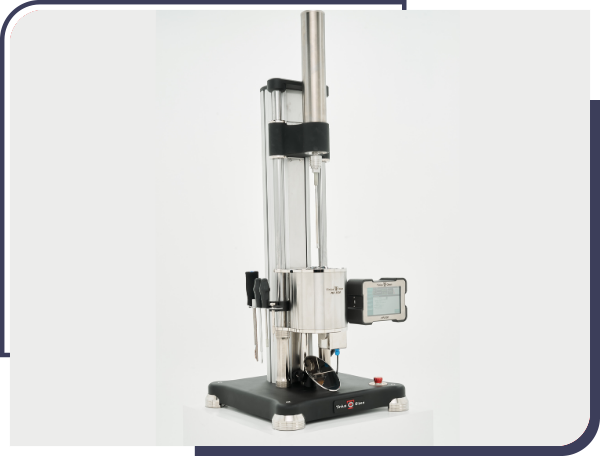
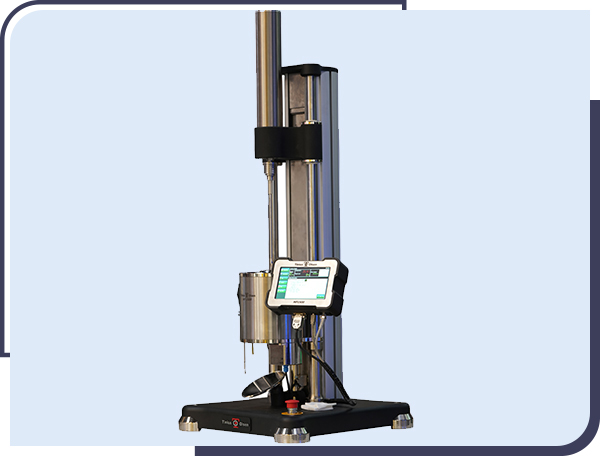
Load cell-based MFI systems are key in today’s materials testing environments to enable quick and easy modifications to test set ups. These systems also deliver far more precision, control, measurement, and available data for streamlined calibration as well as improved testing efficiency and operator safety across the MFI test process. (Figure 2)

Tinius Olsen closed-loop MP1500 Loadcell Melt Flow Indexer that applies load a motor and ball screw system with a proportional integral derivative control feedback
Figure 2. To meet variable test conditions and facilitate rapid set up, load cell melt flow indexers streamline plastics and polymer testing. Pictured: MP1500

A closed loop system, like the MP1500 Loadcell Melt Flow Indexer, will detect small variations in flow that a conventional weighted system may miss and can measure the sensitivity of force across the entire test for higher accuracy in the results. It works with closed loop, where load is applied by a motor and ball screw system with a PID (proportional integral derivative) control feedback. With no dead weights, human error is reduced and results across different labs and operators are more repeatable and consistent.

Integrated sensors enable real-time tracking of melt viscosity and flow behavior during extrusion as well as continuous monitoring of piston position, load, and displacement, and even rapid data logging and analysis.

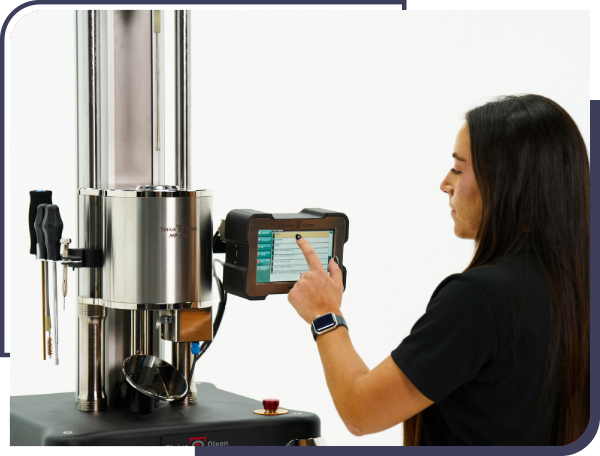
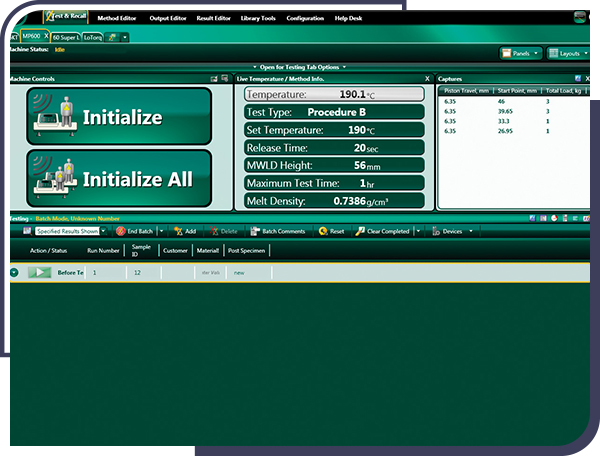
Operators can configure machine options and program user settings (language, units, alarms, etc.) from an integrated display interface as well as set and store individual test protocols for rapid recall. The unit can be controlled via the touchscreen when combined with a comprehensive software suite, like Horizon, the equipment becomes a test system powerhouse, improving overall manufacturing operations through shared data and advanced analytic capabilities. (Figure 3)

Alt text: Screen shot of Tinius Olsen’s intuitive Horizon software platform that cohesively manages the increasing amount of data sets available in modern materials testing.
Figure 3. Intuitive software platforms, like Horizon, cohesively manage the increasing amount of data sets available in modern materials testing.

Emerging Markets and Industry Needs

Load-cell based melt flow test systems are gaining popularity across a wide range of industries, from manufacturing, compounding, and packaging to automotive, medical, 3D printing, and recycling. By providing greater accuracy, automation, flexibility, and efficiency, these systems are instrumental in modern quality control labs and R&D environments as well as where precise material control and consistency is required.

As the use of plastics in these industries continues to evolve, there will be a steady growth in the need for melt flow testing. Technological advancements and efficient processes will be paramount in ensuring new applications and production environments maintain the level of quality performance demanded of today’s plastics and polymer resins and powders.