
Tinius Olsen Melt Flow Indexer

Modern Melt Flow Indexing Advances Polymer & Plastics Testing

You Will Learn:

  • How digital advancements are shifting MFI testing  
  • Which plastics and polymers benefit most from loadcell-based melt flow analysis 
  • How deeper data insights improve new materials being developed for demanding applications 

Evaluating the processing behavior of thermoplastic materials is becoming more intuitive, thanks to the use of automation and digitization in melt flow indexing. Materials testing in general is increasingly reliant on digital workflows, IoT-enabled instrumentation, and integrated robotics to enable more intelligent interpretations of material behavior. 

Melt flow index (MFI) testing determines a polymer’s melt flow index value as well as critical parameters like material viscosities and batch-to-batch consistency. With the introduction of new loadcell-based melt flow indexers, materials testing environments across the board gain critical insights into polymer viscosity, molecular structure, and processing performance. 

Overview

This white paper discusses how a material’s properties affect MFI as well as the reasons certain polymers are better suited for specific applications, as determined by the MFI. It also explores the differences and applications of traditional versus digital melt flow indexers and the application environment where each is best suited. 

Digging deeper into the new digital advancements afforded by the loadcell-based MP1500, the paper examines individual application environments and how new analytical insights can contribute to better productivity, improved operations and the development of new polymer compositions. 

Compliance to ASTM D1238 and ISO 1133 for MFIs is also reviewed along with the current landscape of the digital materials testing environment and the MFI’s role within. 
January 2026

Advanced Melt Flow Indexing Creates Better Work Environment; Easier Testing

As a cornerstone of quality control for polymers and plastics, melt flow indexers (MFIs) play a key role in understanding the processing behavior of these types of materials.

Traditional melt flow systems are grounded in the physical interaction between the machine and operator to set up and perform melt flow tests, from loading and unloading the deadweights to properly cleaning the equipment once a test is complete. Repeatability relies heavily on the consistency and stamina of the operator to replicate test conditions across multiple testing scenarios.

A deadweight system is still the mainstay of the industry, but as automation and digitization continue to permeate materials testing environments, loadcell-based technology is starting to gain influence across various melt flow testing applications throughout laboratories, research and development facilities and plastics manufacturers alike.

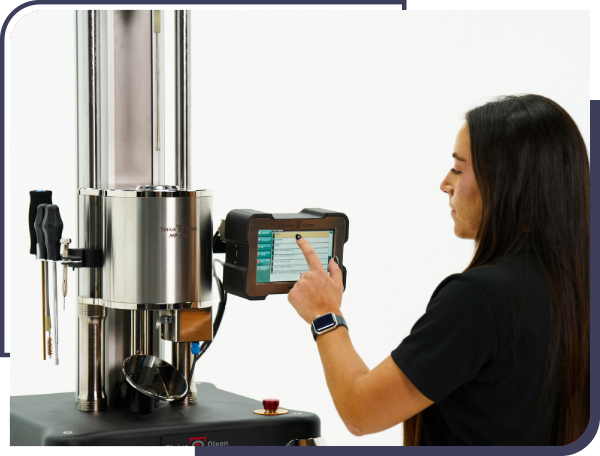
This advanced melt flow technology offers a clear, practical shift to better efficiency, accuracy, and operator safety in test environments, especially those with variable testing requirements, such materials with different viscosities or compositions as well as facilities with high testing frequencies and fluctuating loads. (Figure 1)

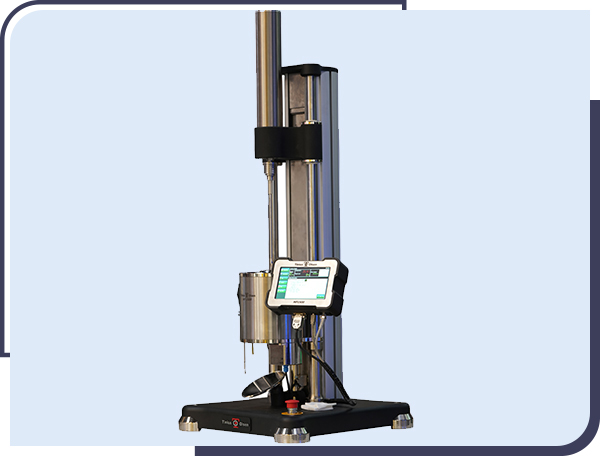
Tinius Olsen MP1500
Figure 1. Loadcell-based MFIs, like the MP1500, are providing enhanced operator safety and production benefits across a number of testing environments.

Considerations When Using Traditional MFIs

The manual nature of traditional melt flow indexers puts operator ergonomics at the forefront of workplace safety. Even with an automated deadweight loader, a person still needs to physically manipulate several steps of the load set up, such as making manual judgements and verifications. This can equate to operator strain and fatigue as well as increased risk of injury.

Repetitive, manual tasks are also a part of the traditional MFI testing process. One example is cleaning the system, which takes time and effort and must be done proficiently to ensure batch consistency and avoid cross contamination among different samples.

The industry is looking towards loadcell-based melt flow testing, not only for operator safety and production efficiency, but also to incorporate better data analysis and reporting, as the world of materials testing continues to become digitized. (Figure 2)

Digital Melt Flow Testing
Figure 2. Digital melt flow testing simplifies the test environment, like eliminating deadweights and automating between-test cleanings.

Loadcell-based Melt Flow Testing For Improved Production

Digital melt flow indexing becomes even more significant as material compositions change, due to new additives and fillers being incorporated into today’s polymers and plastics in addition to the plastics industry’s move towards sustainability. Commonly referred to as the circular economy, plastics sustainability focuses on materials that are reused, recycled and kept in circulation for as long as possible.

The melt flow index helps determine material performance and quality in a given application. Determining how variations in the MFI correlate to material properties, like density and mechanical behavior, means you have a deeper understanding of how the MFI value affects the material being tested. (Figure 3)

melt flow testing provides the insights to ensure the quality and consistency in a material’s performance.
Figure 3. As compositions of plastics and polymers change, melt flow testing provides the insights to ensure the quality and consistency in a material’s performance.

Ensuring new variations and recycled or reused plastics still adhere to the required standards outlined by ASTM D1238-23a and ISO 1133-1:2022, for example, ensures accurate and repeatable results. These standards provide a reliable benchmark that drives quality, enables material selection and supports advancements in material science.

As ASTM points out, “The flow rate obtained with the extrusion plastometer [melt flow indexer] is…an empirically defined parameter critically influenced by the physical properties and molecular structure of the polymer and the conditions of measurement.”

But beyond its uses in materials evaluation, a digital melt flow tester can improve operator safety and production efficiency, giving those on the floor a better work environment as well as insights into evaluating test results. It also empowers them to make real-time changes as needed and perform a different set of process and procedural tasks that can improve overall quality and production efficiency.

When Does A Digital MFI Make Sense

As materials testing becomes more digitized, integration across testing systems and platforms will continue to increase. The timing of adding a loadcell-based MFI to your current test set up comes down to assessing its integration from a holistic viewpoint, so ask yourself these questions:

  • What are the current digital capabilities of my materials testing system?
  • Is there a timeline for bringing my whole system into a digital environment?
  • Am I handling several different polymer types that require many load variations?
  • Will this help meet ASTM & ISO requirements for new materials development?
  • Am I happy with the accuracy and repeatability of my current MFI?
  • Could a digital MFI improve my time between tests?
  • Do I need to better integrate my MFI results into my overall reporting and analysis?
  • What will these improvements do for overall efficiency and analysis?
  • What opportunities will this open for my operators?


What’s Next for Melt Flow Testing

The move to a digitally-enhanced MFI allows those involved with materials testing the ability to focus less on the mechanics of testing and more on the quality of results. The added benefits of operator efficiency and a safer working environment only enhance the implementation of a loadcell-based MFI within a testing environment.

This is especially useful in applications where multiple loads are being manipulated on a regular schedule as well as in environments where new additives and composites need evaluation, so testing personnel can take a more active role in evaluation and analysis to ensure quality results in today’s plastics and polymer melt flow testing.

Recent Shifts in Melt Flow Indexing

Over the past several years throughout the automotive, packaging, healthcare and electronics industries, the demand for plastics and polymers has been on the rise, increasing the frequency and use of melt flow testing across most manufacturing environments. Each industry must follow stringent quality control guidelines, as put forth by ASTM and ISO, to gauge precise measurements of melt flow properties, maintain quality control and establish consistent product development processes. (Figure 1)

Pink perforated bunny figurine demonstrates the consistent quality of plastics and polymers provided by melt flow testing
Figure 1. A critical aspect in product quality, standards-based melt flow testing helps ensure the consistent quality of plastics and polymers used in manufacturing.

Melt flow testing’s critical role helps determine the flow properties and viscosity of plastics and polymers in a variety of production applications. Melt flow index (MFI) testers are one of the staple materials testing systems companies use to meet the widely accepted ASTM 1238 D-23a and ISO 1133-1:2022 standards as well as comply with specific industry regulations.

Melt Flow Testing Basics

Manufacturing processes have different requirements based on the production method being used, the material being processed and the intended final product, but the melt flow test process is basically the same:

  1. Test Preparation: a known quantity of polymer granules is added to machine’s barrel
  2. Polymer Melting: polymer is heated to a specific, consistent temperature
  3. Load Applied: Force is applied to the piston (physical weights or via load cell)
  4. Polymer Extruded: Molten polymer is pushed through a die
  5. Extrusion Measurement: extruded polymer is collected over a specified period
  6. MFI Calculation: value is determined based on the extruded polymer weight and timeframe

The standard units to express the MFI calculation – typically g/10 min for melt flow index MFR or cm³/10min for volume flow index MVR (ASTM/ISO) – remain the same, allowing for consistency and comparability across different materials and testing conditions.

What MFI Testing Systems are Available?

Traditional melt flow indexers employ a set of physical dead weights that are either manually or automatically placed on the machine for testing. This type of system is best suited for applications with a stable environment, where load, temperature, and material composition don’t change.

However, most manufacturing facilities as well as research labs, universities and third-party testing companies need to accommodate at least some variables in the melt flow testing process.

Load cell-based MFI systems are key in today’s materials testing environments to enable quick and easy modifications to test set ups. These systems also deliver far more precision, control, measurement, and available data for streamlined calibration as well as improved testing efficiency and operator safety across the MFI test process. (Figure 2)

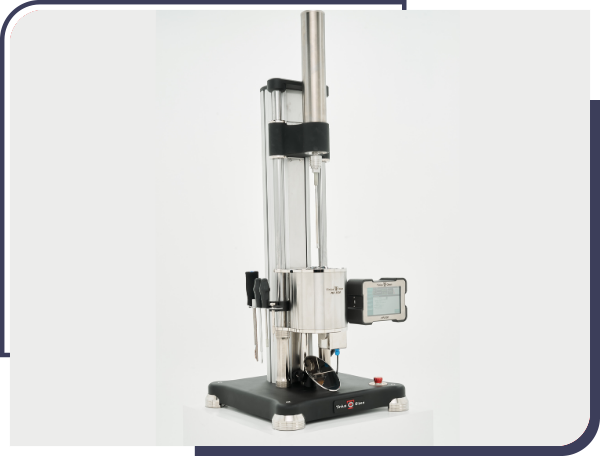
Tinius Olsen closed-loop MP1500 Loadcell Melt Flow Indexer that applies load a motor and ball screw system with a proportional integral derivative control feedback
Figure 2. To meet variable test conditions and facilitate rapid set up, load cell melt flow indexers streamline plastics and polymer testing. Pictured: MP1500

A closed loop system, like the MP1500 Loadcell Melt Flow Indexer, will detect small variations in flow that a conventional weighted system may miss and can measure the sensitivity of force across the entire test for higher accuracy in the results. It works with closed loop, where load is applied by a motor and ball screw system with a PID (proportional integral derivative) control feedback. With no dead weights, human error is reduced and results across different labs and operators are more repeatable and consistent.

Integrated sensors enable real-time tracking of melt viscosity and flow behavior during extrusion as well as continuous monitoring of piston position, load, and displacement, and even rapid data logging and analysis.

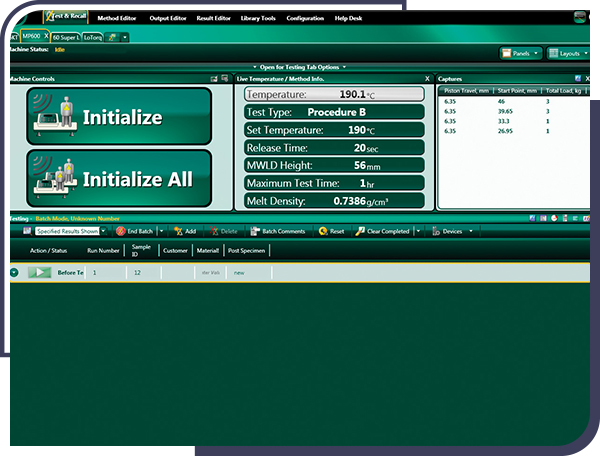
Operators can configure machine options and program user settings (language, units, alarms, etc.) from an integrated display interface as well as set and store individual test protocols for rapid recall. The unit can be controlled via the touchscreen when combined with a comprehensive software suite, like Horizon, the equipment becomes a test system powerhouse, improving overall manufacturing operations through shared data and advanced analytic capabilities. (Figure 3)

Alt text: Screen shot of Tinius Olsen’s intuitive Horizon software platform that cohesively manages the increasing amount of data sets available in modern materials testing.
Figure 3. Intuitive software platforms, like Horizon, cohesively manage the increasing amount of data sets available in modern materials testing.

Emerging Markets and Industry Needs

Load-cell based melt flow test systems are gaining popularity across a wide range of industries, from manufacturing, compounding, and packaging to automotive, medical, 3D printing, and recycling. By providing greater accuracy, automation, flexibility, and efficiency, these systems are instrumental in modern quality control labs and R&D environments as well as where precise material control and consistency is required.

As the use of plastics in these industries continues to evolve, there will be a steady growth in the need for melt flow testing. Technological advancements and efficient processes will be paramount in ensuring new applications and production environments maintain the level of quality performance demanded of today’s plastics and polymer resins and powders.