
January 2026
Advanced Melt Flow Indexing Creates Better Work Environment; Easier Testing
As a cornerstone of quality control for polymers and plastics, melt flow indexers (MFIs) play a key role in understanding the processing behavior of these types of materials.
Traditional melt flow systems are grounded in the physical interaction between the machine and operator to set up and perform melt flow tests, from loading and unloading the deadweights to properly cleaning the equipment once a test is complete. Repeatability relies heavily on the consistency and stamina of the operator to replicate test conditions across multiple testing scenarios.
A deadweight system is still the mainstay of the industry, but as automation and digitization continue to permeate materials testing environments, loadcell-based technology is starting to gain influence across various melt flow testing applications throughout laboratories, research and development facilities and plastics manufacturers alike.
This advanced melt flow technology offers a clear, practical shift to better efficiency, accuracy, and operator safety in test environments, especially those with variable testing requirements, such materials with different viscosities or compositions as well as facilities with high testing frequencies and fluctuating loads. (Figure 1)
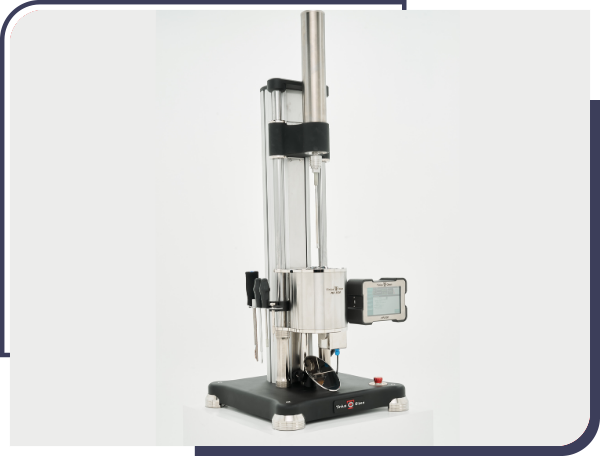
Considerations When Using Traditional MFIs
The manual nature of traditional melt flow indexers puts operator ergonomics at the forefront of workplace safety. Even with an automated deadweight loader, a person still needs to physically manipulate several steps of the load set up, such as making manual judgements and verifications. This can equate to operator strain and fatigue as well as increased risk of injury.
Repetitive, manual tasks are also a part of the traditional MFI testing process. One example is cleaning the system, which takes time and effort and must be done proficiently to ensure batch consistency and avoid cross contamination among different samples.
The industry is looking towards loadcell-based melt flow testing, not only for operator safety and production efficiency, but also to incorporate better data analysis and reporting, as the world of materials testing continues to become digitized. (Figure 2)
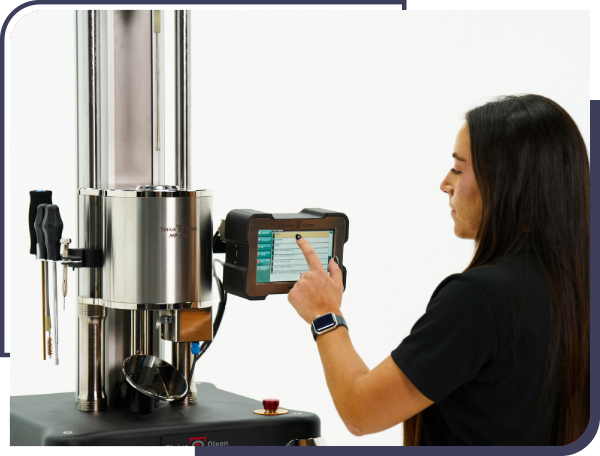
Loadcell-based Melt Flow Testing For Improved Production
Digital melt flow indexing becomes even more significant as material compositions change, due to new additives and fillers being incorporated into today’s polymers and plastics in addition to the plastics industry’s move towards sustainability. Commonly referred to as the circular economy, plastics sustainability focuses on materials that are reused, recycled and kept in circulation for as long as possible.
The melt flow index helps determine material performance and quality in a given application. Determining how variations in the MFI correlate to material properties, like density and mechanical behavior, means you have a deeper understanding of how the MFI value affects the material being tested. (Figure 3)

Ensuring new variations and recycled or reused plastics still adhere to the required standards outlined by ASTM D1238-23a and ISO 1133-1:2022, for example, ensures accurate and repeatable results. These standards provide a reliable benchmark that drives quality, enables material selection and supports advancements in material science.
As ASTM points out, “The flow rate obtained with the extrusion plastometer [melt flow indexer] is…an empirically defined parameter critically influenced by the physical properties and molecular structure of the polymer and the conditions of measurement.”
But beyond its uses in materials evaluation, a digital melt flow tester can improve operator safety and production efficiency, giving those on the floor a better work environment as well as insights into evaluating test results. It also empowers them to make real-time changes as needed and perform a different set of process and procedural tasks that can improve overall quality and production efficiency.
When Does A Digital MFI Make Sense
As materials testing becomes more digitized, integration across testing systems and platforms will continue to increase. The timing of adding a loadcell-based MFI to your current test set up comes down to assessing its integration from a holistic viewpoint, so ask yourself these questions:
- What are the current digital capabilities of my materials testing system?
- Is there a timeline for bringing my whole system into a digital environment?
- Am I handling several different polymer types that require many load variations?
- Will this help meet ASTM & ISO requirements for new materials development?
- Am I happy with the accuracy and repeatability of my current MFI?
- Could a digital MFI improve my time between tests?
- Do I need to better integrate my MFI results into my overall reporting and analysis?
- What will these improvements do for overall efficiency and analysis?
- What opportunities will this open for my operators?
What’s Next for Melt Flow Testing
The move to a digitally-enhanced MFI allows those involved with materials testing the ability to focus less on the mechanics of testing and more on the quality of results. The added benefits of operator efficiency and a safer working environment only enhance the implementation of a loadcell-based MFI within a testing environment.
This is especially useful in applications where multiple loads are being manipulated on a regular schedule as well as in environments where new additives and composites need evaluation, so testing personnel can take a more active role in evaluation and analysis to ensure quality results in today’s plastics and polymer melt flow testing.